
Couples + Relational Therapy

Relationships can bring us some of our deepest experiences of love, belonging, intimacy, and connection. They can also touch some of our most tender places.
You may love one another deeply and still find yourselves caught in the same arguments, misunderstandings, distance, or patterns of pursuing and withdrawing. In these moments, it can become difficult to hear what your partner is actually trying to communicate when your own hurt, fear, anger, or past experiences are activated.
Couples and relational therapy creates space to slow down the patterns that hinder growth and create new ways of relating through deep listening and intentional repair.
Rather than focusing only on who is right or what happened, we become curious about what is happening underneath the conflict: what each person is protecting, longing for, afraid of, or trying to communicate. As you understand both your own responses and your partner’s experience more clearly, there is greater possibility for repair, honesty, intimacy, and choice.
Our individual histories shape what we expect, what we fear, and how we interpret one another. When emotions become intense, it can be difficult to stay connected to ourselves while remaining open to the person in front of us.
Together, we work toward creating enough steadiness and safety for each person to speak more honestly and listen more fully. You can begin to recognize your body’s cues, understand the patterns that pull you apart, express needs and boundaries with greater clarity, and respond to one another with more curiosity and compassion.
Our work draws from attachment and family systems perspectives, Internal Family Systems (IFS), mindfulness and somatic therapy, and sex-positive approaches. These frameworks help us work not only with the story of the relationship, but with the deeper emotional, relational, and embodied patterns underneath it.
Relational therapy can help you know yourself more deeply, understand one another in new ways, strengthen secure attachment, and build greater capacity for intimacy, repair, play, honesty, and connection.

Specialties
We hold a sex-positive and affirming space for:
Intimacy, attachment, and recurring relationship patterns
Communication, conflict, and repair
Sex, sexuality, and kink
LGBTQIA+ relationships
Consensual non-monogamy
Neurodivergence in relationships
Co-parenting and family relationships
Major life transitions, grief, caregiving, and identity shifts
Supporting a partner living with trauma or PTSD
Friendship, creative, and professional relationships
Integrating meaningful psychedelic or transpersonal experiences within a relationship
Scope of Practice
Couples therapy can be helpful for relationship distress, recurring conflict, betrayal, affairs, intimacy concerns, and major ruptures. We do not provide treatment for high-conflict separation or divorce matters, including custody disputes, litigation, or court-involved relational work. We also assess whether conjoint therapy is appropriate when there is ongoing coercion, intimidation, or violence that makes open participation unsafe.
A Message from Our Couples Therapists
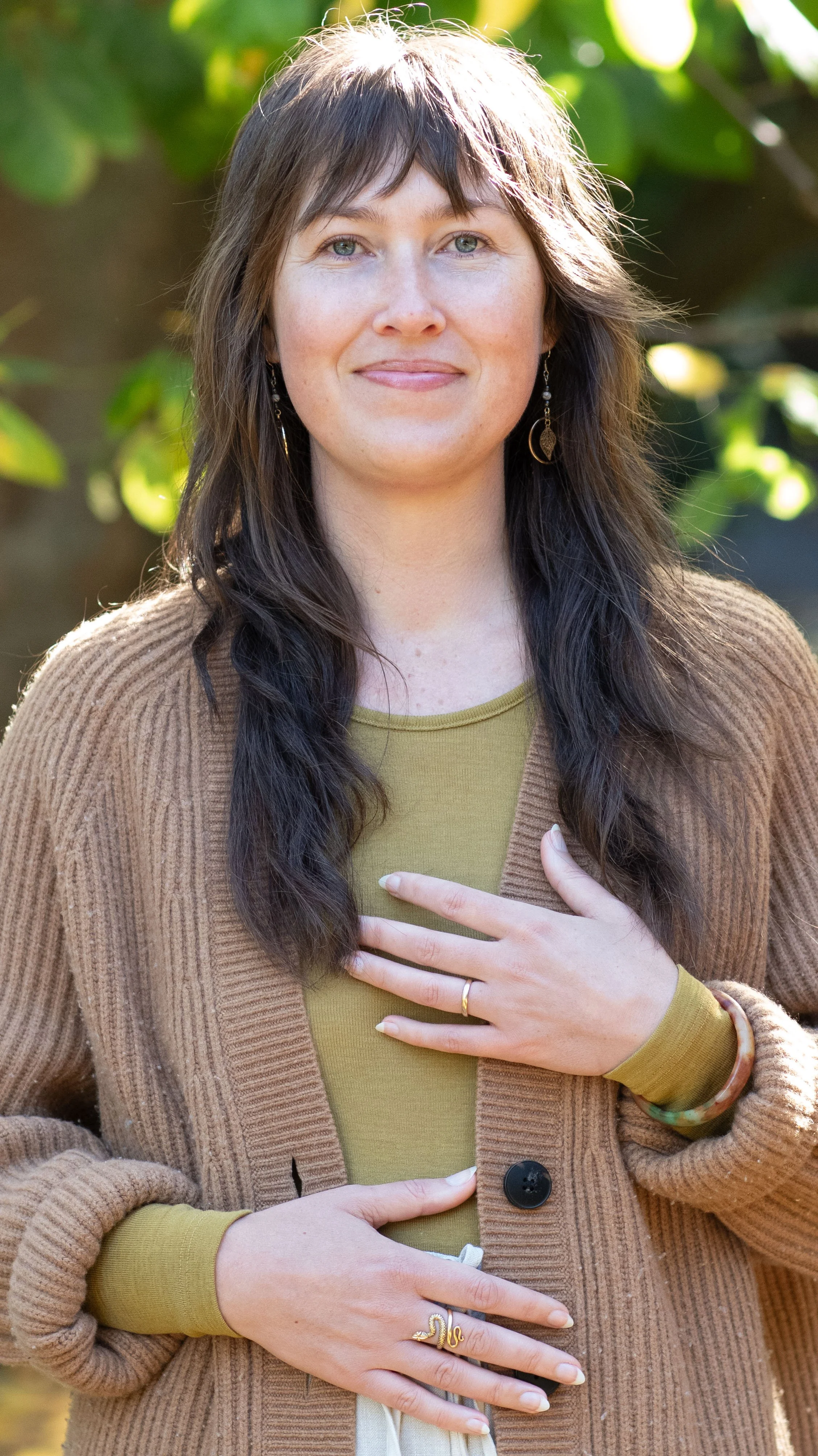
Emily Grooms, MA, LMFT
“I believe we often choose our partners for reasons that reach beyond our initial understanding. There can be something in the relationship, even something we recognize only subconsciously at first, that invites us to grow and encounter parts of ourselves we could not access in quite the same way alone.
Partnership can act as a mirror into corners of our humanness that are only touched through relationship. Many of our deepest wounds are relational, and intimate partnership can offer an opportunity to meet those wounds differently.
My hope is to help couples develop greater mutual respect, reverence, and ownership for the relationship they are choosing to create. Beneath conflict, there is often something larger asking to be understood: a vulnerable place, an old protection, a longing, or a growing edge.
Slowing down, learning to co-regulate, and deepening curiosity and compassion can help couples meet one another as partners rather than simply reacting from hurt or fear.
I also believe a relationship’s value is not determined only by whether it lasts. Relationships that continue, and relationships that end, can both offer profound opportunities for growth, self-understanding, and learning how we want to love and be loved.”

Ash Anthony, MA, LMFT
“When we enter a relationship, we bring our hopes, dreams, joy, and desire for connection. We also bring our conditioning, the parts of ourselves we would rather avoid, and places within us that still long for relational repair.
I don’t think the success of a relationship is defined only by whether it lasts. It also lives in how we navigate fear, uncertainty, pain, and the unknown while remaining rooted in ourselves and making room for the reality that our partner has their own needs, desires, wounds, and longings.
There is something deeply generative in learning to stay present without immediately blaming, fixing, defending, or turning away from what is uncomfortable. We can begin to understand ourselves through the other while developing enough differentiation to stand on our own two feet, reducing power struggles and interrupting patterns that keep repeating.
My work is also deeply somatic. I use the body to help couples understand what brings each person into greater steadiness, what tends to overwhelm or shut them down, and what helps their partner feel more available and connected. From there, communication can become less reactive and more supportive of closeness and understanding.
As a couples therapist, I help relationships slow down enough for each person to hear the other with more curiosity and compassion. We begin to distinguish between what is happening now and what fear or past experience is telling us is happening, while learning that pain can be tended to without abandoning ourselves or losing closeness.
From there, something new can emerge: a relationship larger than either individual alone, with greater capacity to hold complexity, difference, intimacy, and the full range of being human.”